

Online reviews have become a make-or-break factor for general contractors competing in local markets. Studies show that 93% of consumers say online reviews influence their purchasing decisions, and 91% trust these reviews as much as personal recommendations.
In fact, an average consumer reads about 10 reviews before deciding whether to trust a local business. Moreover, 92% of people won’t even consider a contractor with less than a four-star average rating.
For general contractors, this means that maintaining a strong online reputation is critical – positive reviews can be the modern equivalent of word-of-mouth referrals, helping you stand out and win jobs in a crowded marketplace. Conversely, a weak or neglected review profile can cause potential clients to pass you over in favor of better-rated competitors.
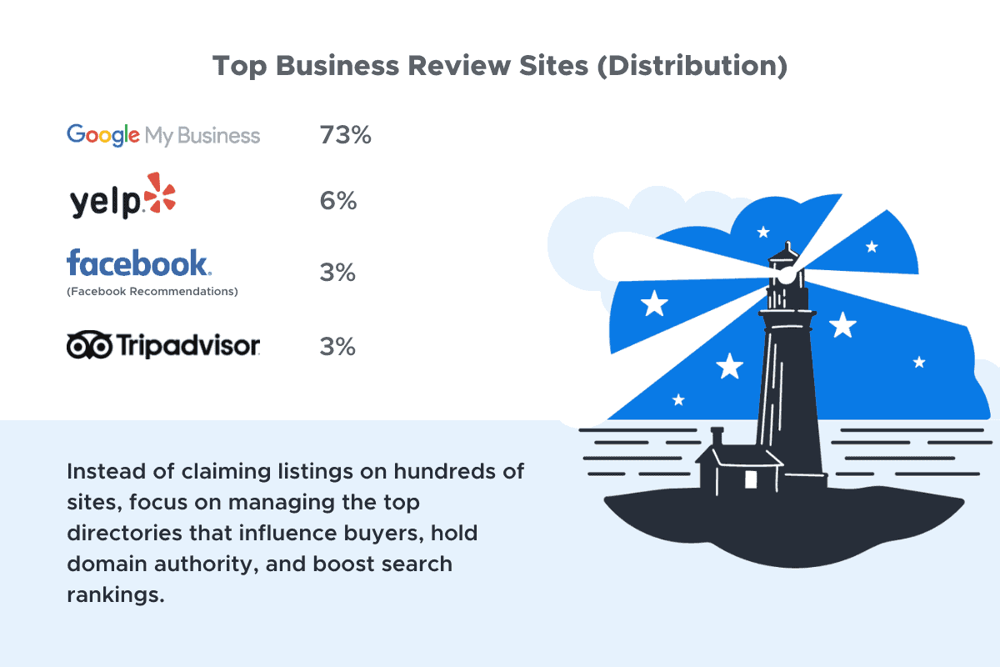
Top Review Management Platforms in 2025
Several software platforms have emerged to help businesses gather, monitor, and leverage customer reviews. Below we analyze some of the most effective review management tools as of 2025 – including both newer entrants and legacy platforms that continue to deliver strong value.
Each tool is examined for its key features, integrations (especially with Google Business Profile and popular contractor CRMs), multi-location management capabilities, and overall pros and cons.
1. BirdEye
BirdEye is a comprehensive reputation management platform (founded in 2014) that has evolved into an all-in-one customer experience solution for local businesses. BirdEye’s core features include automated review collection via SMS/email, broad review monitoring, and AI-driven analytics.The software can send customers review requests by text or email immediately after a job is completed, dramatically increasing feedback volume. It aggregates reviews from over 150 sites in real time for easy tracking, and even uses AI to generate suggested responses to reviews – enabling contractors to respond promptly to clients’ comments. BirdEye also extends beyond reviews: it offers built-in tools for social media scheduling, customer surveys (including NPS scores), and even a unified inbox for messaging leads and clients across text, web chat, and social channels.
- BirdEye Pros: BirdEye stands out for its comprehensive feature set – from review generation and social posting to customer surveys and even payment processing – all in one platform. Its heavy use of AI provides automation that reduces the manual workload (e.g. auto-responding to reviews, sentiment analysis for insights). The interface is generally user-friendly despite the breadth of tools, and the company is known for strong customer support to help users get the most out of the software.
- BirdEye Cons: Because BirdEye offers so many features, smaller contractors might find it more than they need. The platform can feel overwhelming for very small businesses, and there may be a learning curve to utilize all its capabilities. The pricing is also on the higher side – in 2025 BirdEye’s plans range roughly from $299 to $449 per month depending on features, which some budget-conscious users consider expensive relative to lighter-weight alternatives.
- Podium Pros: Podium offers seamless Google integration that uniquely simplifies review gathering – contractors can send a review invite by text and customers can instantly leave a Google review, boosting volume of feedback. Its emphasis on text-message based workflows fits how many contractors communicate with clients today (quick updates, scheduling, etc.), and Podium’s unified inbox means no message or review goes unnoticed.
- Podium Cons: One downside noted is that Podium’s bulk texting capabilities are limited on lower-tier plans – for instance, the “Pro” plan caps broadcast messages (e.g. promos or review blasts to many contacts) at 500 per month, which may not suffice for contractors with large client lists. To send more, businesses must pay extra, so high-volume outreach is costly. More broadly, Podium’s pricing is on the premium end for small business software. Many basic texting or marketing tools cost well under $100/month, whereas Podium’s plans (with its advanced features) come at a higher price point – something the company justifies by the breadth of its capabilities.
Yext is a legacy player in the local SEO and listings management space that also offers review management features, making it relevant for multi-location contractors or those focused on consistent online presence. Yext’s platform is primarily known for ensuring business information is accurate across dozens of directories and maps – “keeping your business details accurate on search engines, directories, and maps”. In terms of reviews, Yext aggregates customer reviews from a wide array of sites (Google, Facebook, Yelp, industry-specific sites, etc.) into what it calls a “Knowledge Network” where you can monitor and respond to feedback centrally.
- Yext Pros: Yext is ideal for ensuring consistency and visibility across the web. It’s arguably the best at what it was built for – listings management and local SEO – so as a side benefit, using Yext can improve your Google rankings by fixing NAP (name/address/phone) data issues and getting more reviews on major platforms. Its review management component is integrated with that local SEO focus, meaning you can see how your star-ratings and review counts correlate with search performance.
- Yext Cons: The flip side of Yext’s focus is that it’s not primarily a review generation tool. Unlike platforms that help you proactively solicit new reviews via text or email campaigns, Yext’s approach is more about leveraging the reviews that come in organically and amplifying them. It lacks the aggressive review solicitation workflows that tools like Podium or NiceJob offer. For a small contractor looking to dramatically boost their Google reviews count, Yext alone may not move the needle as quickly. Also, Yext’s myriad features and emphasis on enterprise needs can be overkill for a single-location business – many of its strengths (like managing hundreds of directory listings) matter more to larger companies.
- NiceJob Pros: The biggest advantage of NiceJob is effortlessness – it makes getting reviews almost automatic, which is a huge win for busy contractors who don’t have time to manually follow up with every client. By consistently sending reminders, it reliably generates a steady stream of new positive reviews, which in turn increases trust and can directly lead to more sales (many NiceJob users report higher conversion rates due to the boost in their online ratings). The platform is very user-friendly: setup is straightforward, and the interface is simple enough that you don’t need any marketing expertise to navigate it.
- NiceJob Cons: While great for small and medium businesses, NiceJob is not as feature-rich for large-scale enterprises or very complex needs. It doesn’t offer the broad suite of capabilities (like social media management or deep analytics) that some bigger platforms do. For example, you won’t find advanced sentiment analysis or multi-location dashboards for dozens of offices – the tool is optimized for simplicity over complexity. Highly customizable workflows are also limited; you mostly rely on NiceJob’s preset automation (which works well for standard use, but larger organizations might crave more control).
- Reputation Pros: For organizations that need scale and depth, Reputation’s platform is extremely robust. It allows you to manage thousands of reviews across hundreds of sites all in one place, with advanced analytics that can uncover trends (e.g., if multiple project sites are getting feedback about a specific issue, you’ll see that in sentiment reports). The inclusion of social listening (monitoring what customers say on social media) and custom surveys means you’re not relying solely on public reviews – you get a fuller picture of customer satisfaction.
- Reputation Cons: The comprehensive nature of Reputation’s platform can be overkill for smaller businesses. It’s truly designed for enterprises – a contractor with one or two locations likely wouldn’t utilize most of its features. The cost reflects that as well: pricing is typically custom-quoted and can be significant, often requiring an annual contract. (One source notes services can start around $100/year for very basic needs, but robust use with multiple modules will be much higher.) Thus, for a small-to-midsize contractor, the investment might not be justifiable compared to SMB-focused tools.
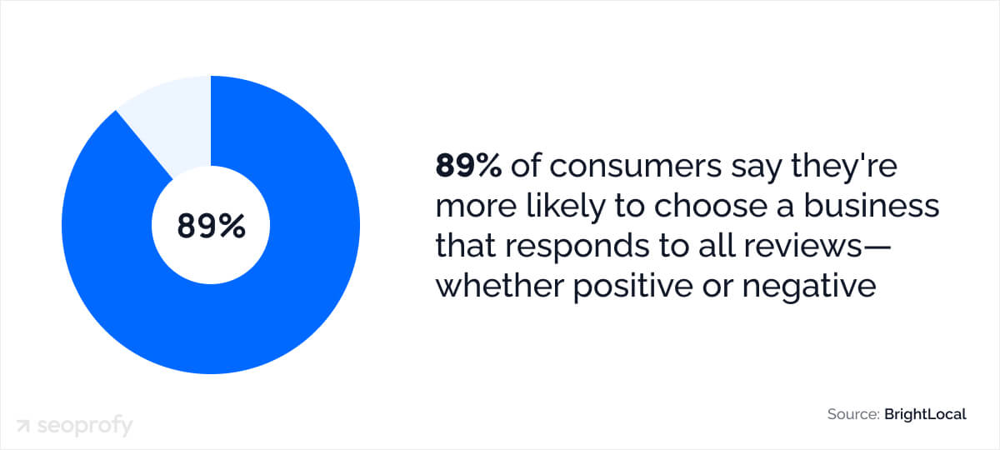
BrightLocal’s consumer survey data underscores why responding to reviews matters: 89% of consumers prefer to hire businesses that answer all feedback, positive or negative. AI-powered tools now assist contractors by automating personalized responses, ensuring no review goes unanswered.
Recommendations for Contractors by Business Size and Needs
Choosing the right review management tool depends on the scale of your operations and the volume of customer feedback you handle:
- Solo Contractors and Small Businesses (Low Review Volume): If you are a one-location business or a solo general contractor who completes a handful of projects per month, start with simple, affordable solutions. A tool like NiceJob is recommended for its ease and quick results – it will automate your review invites and boost your online ratings without requiring much time or technical know-how. Its lower cost is manageable for a small business, and you can always upgrade later.Alternatively, even using free tools – for example, manually sending clients a Google review link and managing reviews within your Google Business Profile – can work at very small scales, though it’s less systematic. The key is to establish a habit of asking for reviews and responding to them. At this size, avoid overspending on enterprise platforms; focus on a tool that automates the basics and generates social proof to help you win the next customer.
- Mid-Sized Contractors (Multiple Crews or Moderate Review Volume): For a growing general contractor with a steady stream of customers (perhaps tens of reviews coming in monthly) and maybe 2–5 service locations, consider a more robust platform like Podium or BirdEye if your budget allows.Podium is an excellent choice if texting is central to your business – it will not only get you reviews on Google and Facebook but also streamline all customer communications (a value-add as your client inquiries grow). It’s especially useful for contractors who want an integrated solution for messaging, reviews, and even payments in one app.
On the other hand, if you want a broader feature set (including things like social media management or in-depth analytics) and have multiple locations to oversee, BirdEye provides a comprehensive toolkit. It’s a bit pricier, but you’ll benefit from its AI features and multi-location dashboards as your review volume increases and you need deeper insights. For mid-sized operations, these investments can pay off by improving efficiency (saving your team’s time) and by driving more leads through improved reputation and SEO. Just ensure you allocate time for initial setup and learning, or have someone on your team manage the platform.
- Large Contractors and Franchises (High Review Volume, Multi-Location): If you operate a large construction firm with numerous offices or a franchised home improvement business, an enterprise-level solution becomes viable. Reputation (Reputation.com) is strongly recommended for its ability to handle large scale and provide a unified view of your brand’s reputation across all markets. The platform’s advanced analytics and integration of surveys can give you strategic insights (e.g., identifying systemic issues across projects, measuring customer satisfaction trends over time).This is valuable when you have hundreds of reviews per month and need to coordinate responses among many team members – Reputation’s workflow tools will help assign and close the loop on feedback. Another option in this tier could be Yext, especially if maintaining consistent listings and boosting local SEO is a top priority alongside reviews. Yext can serve as part of a broader stack (for example, you might use Yext for listings and basic review monitoring, and supplement it with an internal process or another tool for detailed review response and solicitation).
Large organizations might even use multiple tools in tandem – for instance, franchisees could use a lightweight tool like NiceJob or Podium at the local level (to generate and respond to reviews), while corporate uses BirdEye or Reputation to aggregate data and ensure quality control. The recommendation for big contractors is to prioritize platforms with strong multi-location support, role-based access, and analytical depth – even if the cost is higher, the insights and time saved on coordination will justify it.
By doing so, you’ll turn online reviews into a steady engine of growth for your contracting business, building trust with new clients before you even make the first call or bid.